
The Real Risks of Ignoring DPDP Compliance
Most viewed
Most viewed
There is a particular kind of optimism that runs through many early-stage companies when the topic of regulatory compliance comes up. The assumption is that enforcement is distant, that the business is too small to attract scrutiny, or that there will be time to sort it out properly before anything goes wrong.
With the Digital Personal Data Protection Act, 2023, that assumption is becoming an increasingly expensive one to hold.
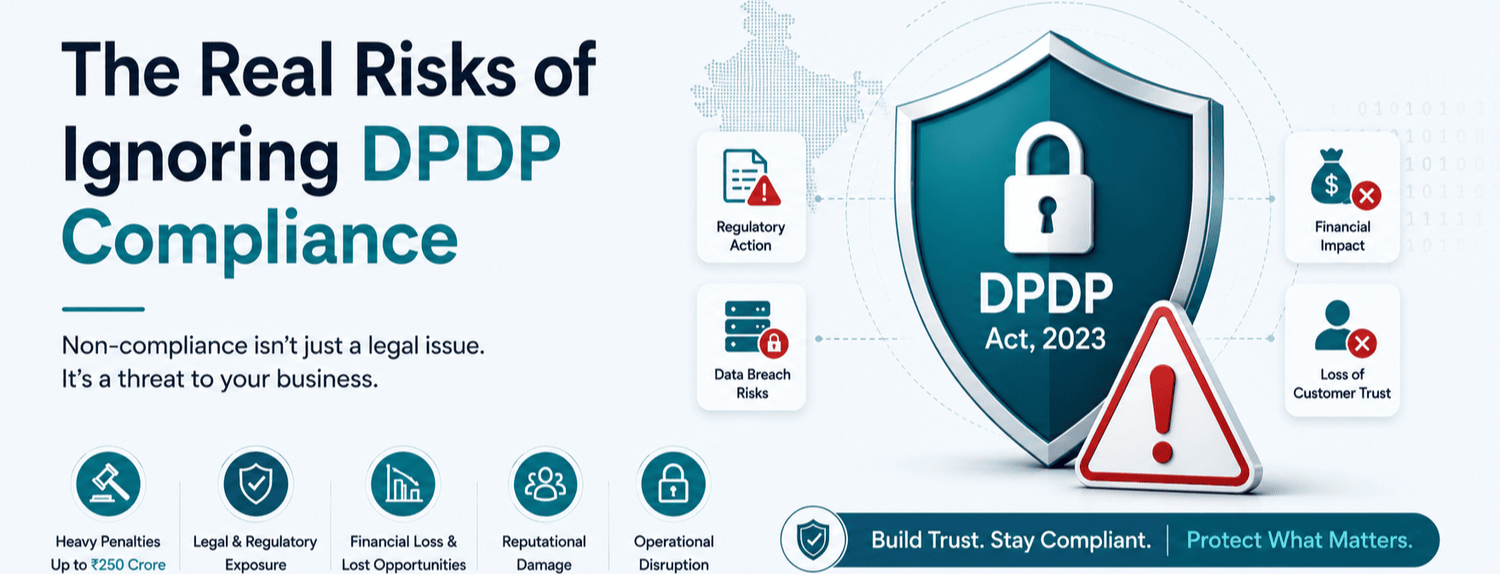
The risks of non-compliance with DPDP span legal exposure, financial penalties, reputational damage, and operational disruption. They compound over time in ways that make late remediation significantly more difficult than getting ahead of it would have been.
Regulatory inquiry, penalties, and an inability to demonstrate compliance even where it exists in practice.
Penalties are the visible risk; lost enterprise deals and rising remediation costs are the larger, longer-lasting ones.
Slow to repair — customer trust broken over a data privacy issue rarely gets a second chance.
Management attention, legal counsel, and technical teams all get pulled in during an investigation.
The DPDP Act establishes a regulatory framework with real enforcement teeth. The Data Protection Board of India is empowered to examine complaints, conduct inquiry and impose penalties on organisations that do not satisfy their duties under the Act.
The DPDP Act provides for a penalty of up to ₹250 crore for each instance of non-compliance and is bound to get the attention of founders and CFOs alike.
But beyond the headline penalty number, the legal exposure extends further. Regulatory investigations are disruptive regardless of their outcome, consuming management time, legal resources, and operational bandwidth at precisely the moments when businesses can least afford it.
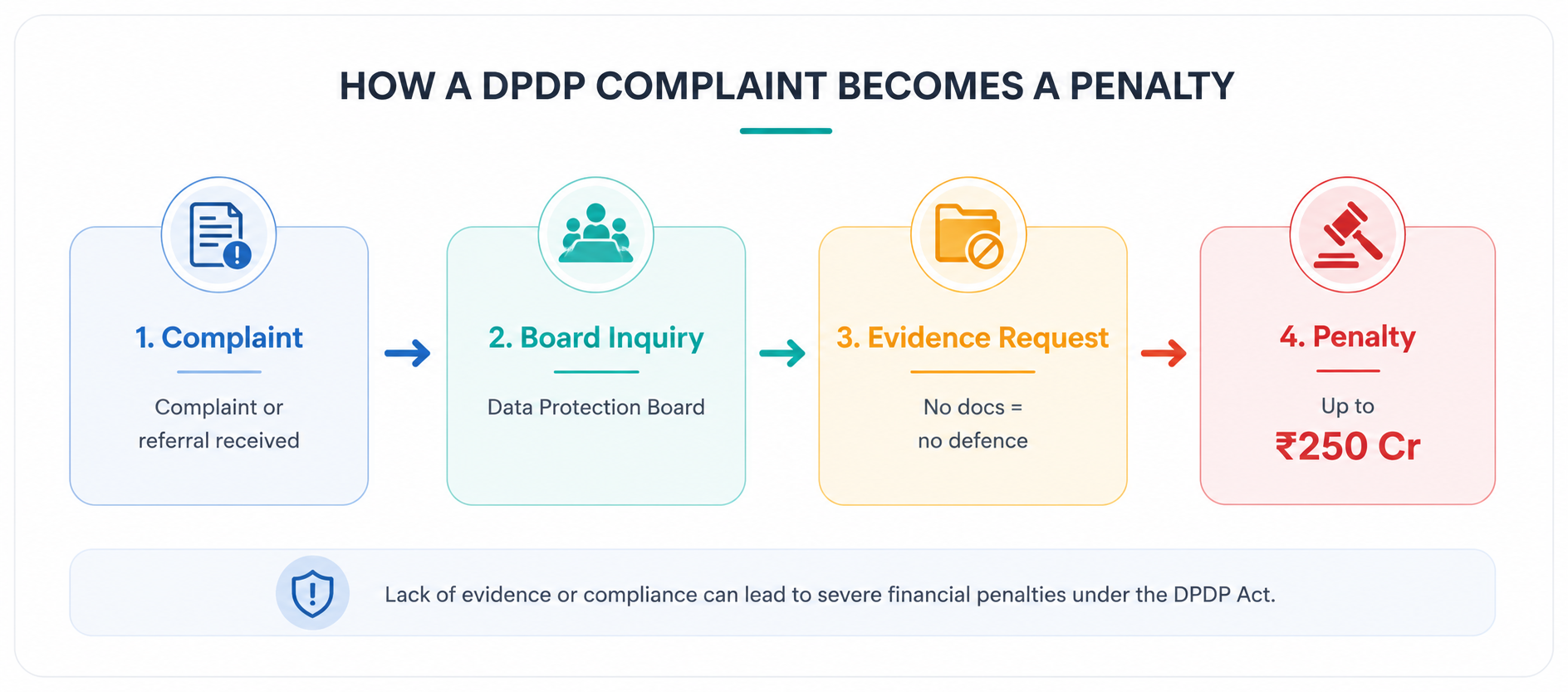
Organisations that have not maintained proper documentation of their data practices will find themselves unable to demonstrate compliance even where it may exist in practice, turning a fixable situation into a finding.
The direct financial impact of a DPDP penalty is the most visible risk, but not necessarily the most significant one in commercial terms. The downstream financial consequences of non-compliance tend to be larger and longer-lasting.
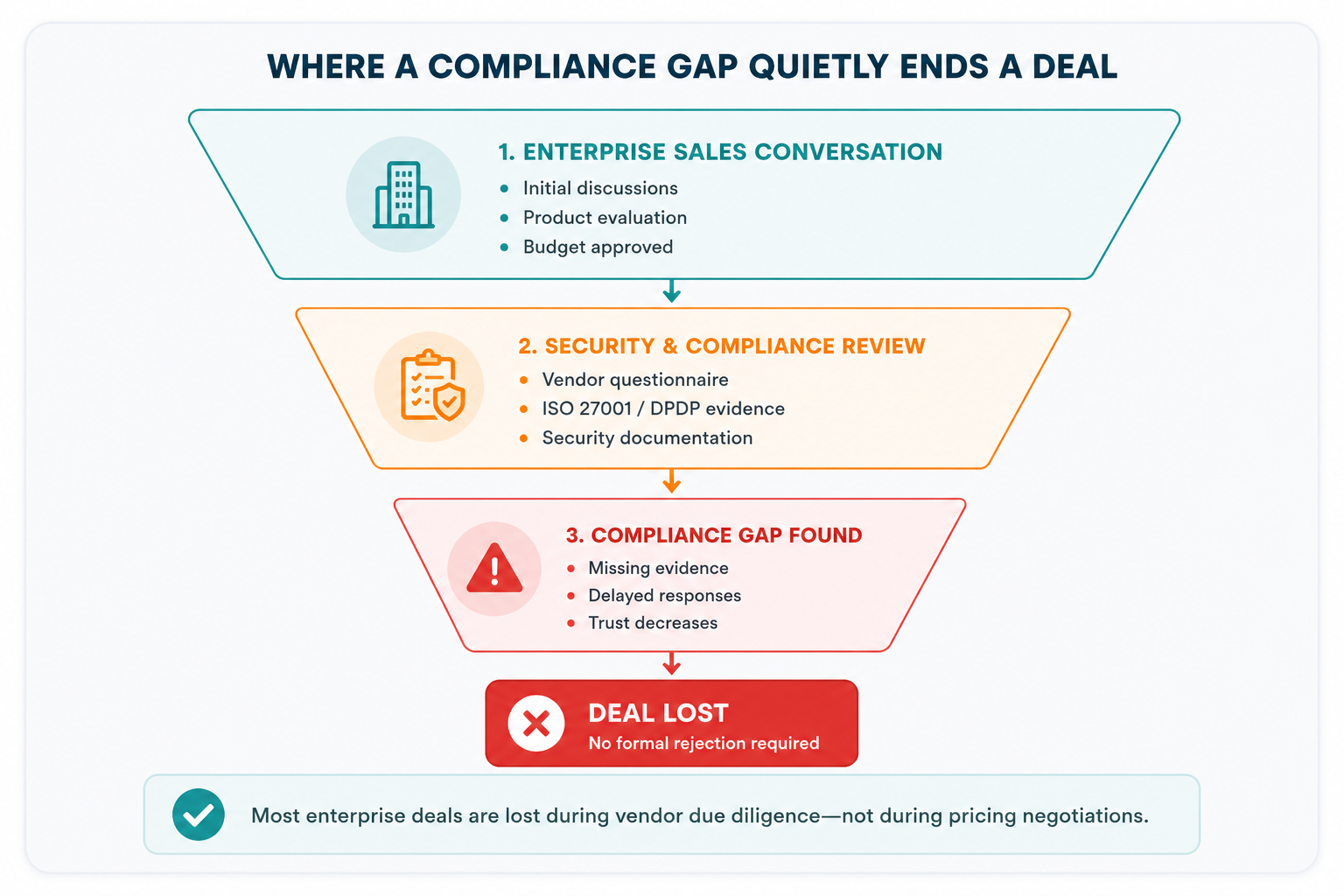
Enterprise clients, particularly those in financial services, healthcare, and technology, are increasingly conducting vendor security and compliance assessments before signing contracts.
A business that cannot demonstrate DPDP compliance will lose deals to competitors that can, often without knowing exactly why the conversation stalled. The revenue impact of compliance gaps in enterprise sales cycles is real but largely invisible, which makes it easy to underestimate.
Remediation costs also increase substantially the longer compliance is deferred. Building consent management workflows, documenting data processing activities, establishing data subject request processes, and retrofitting privacy requirements into existing products is considerably more expensive and disruptive when done reactively than when built into operations from the beginning.
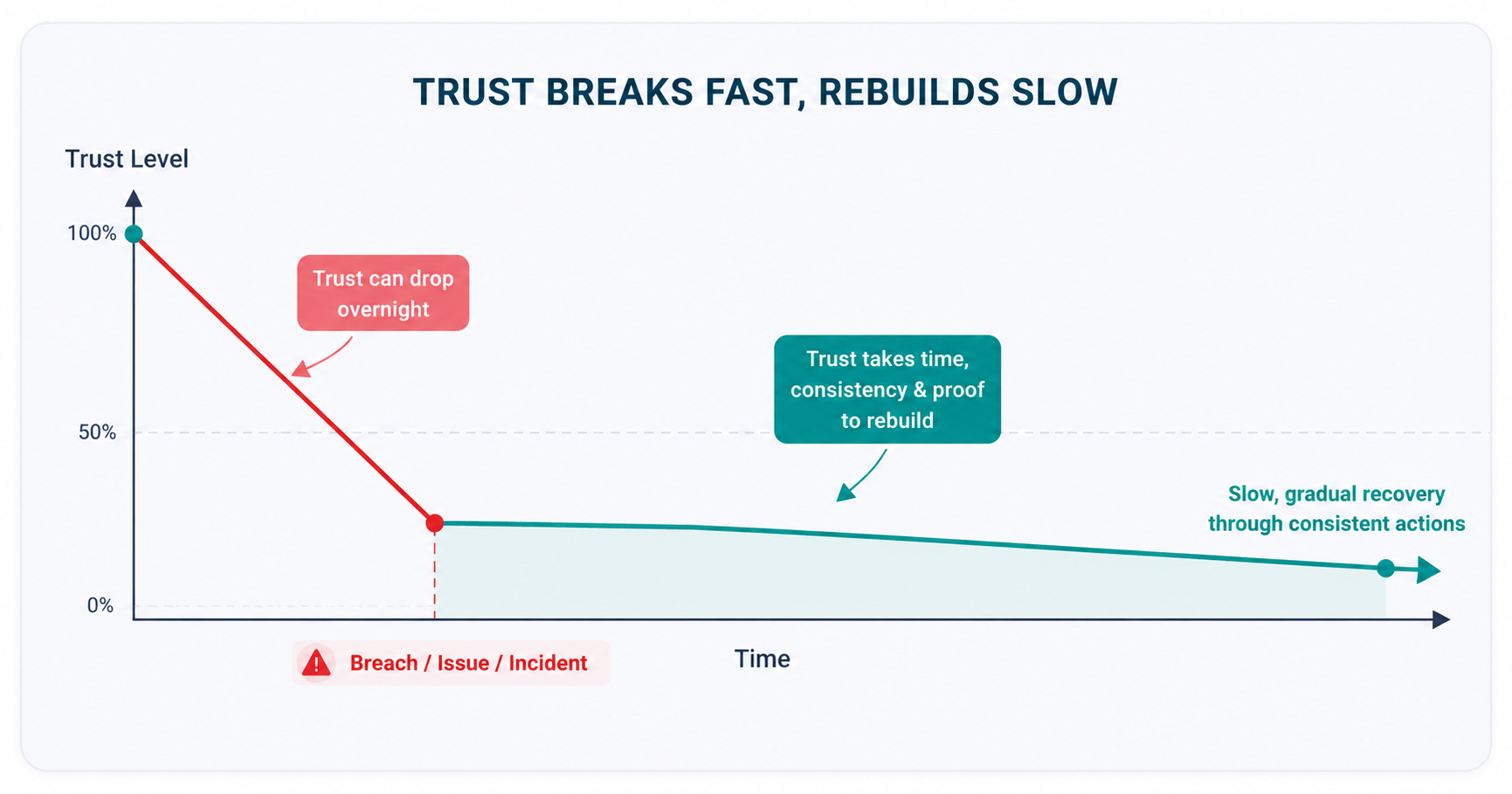
A regulatory action or data breach that becomes public does lasting damage to how a business is perceived, by customers, by partners, and by the market. In an environment where data privacy awareness among Indian consumers is growing steadily, the reputational cost of being associated with a high-profile non-compliance incident is not something that a press release and an apology email can resolve quickly.
Customer trust, once broken over a data privacy issue, is particularly difficult to rebuild because the harm is personal. Users whose data was mishandled or exposed do not forget, and the organisations that handled their data poorly rarely benefit from second chances in the same relationship. For consumer-facing businesses where brand reputation is a core commercial asset, this dimension of DPDP non-compliance risk deserves more weight than it typically receives.
When a regulatory inquiry or audit arrives, the operational impact extends well beyond the compliance team. Management attention shifts. Legal counsel gets engaged. Technical teams are pulled into evidence gathering. Customer-facing teams field questions they are not equipped to answer. The business does not stop, but it slows, at a cost that is difficult to measure but easy to feel.
Management attention shifts
Away from running the business, toward the investigation
Legal counsel gets engaged
Adding cost and formality to every response
Technical teams gather evidence
Pulled off product work to reconstruct data practices
Customer-facing teams field questions
That they are not equipped to answer
Organisations without structured data management practices face particular difficulty during investigations because they cannot quickly produce coherent answers to basic questions about what data they hold, where it is stored, who has access, and what it is being used for. That inability to respond clearly and quickly is itself evidence of non-compliance, regardless of what the underlying practices actually look like.
DPDP compliance and data security are not the same thing, but they are closely related. Organisations that have not implemented proper consent management, access controls, data minimisation practices, and breach response procedures are, almost by definition, organisations with weaker security postures. The compliance gaps and the security gaps tend to appear in the same places.
A data breach at an organisation that was not DPDP-compliant carries a double consequence: the breach itself and the regulatory exposure that follows from the absence of required safeguards. Under the DPDP Act, breach notification obligations are mandatory, and the documentation of how the breach occurred and what controls were or were not in place will be scrutinised directly.
The compliance debt that accumulates from deferred DPDP implementation is real and grows over time. Data processing activities that were never documented become harder to reconstruct.
Consent that was never properly obtained from existing users creates legacy exposure that is difficult to remediate without disrupting user relationships. Privacy requirements that were not built into product architecture from the beginning require expensive retrofitting.
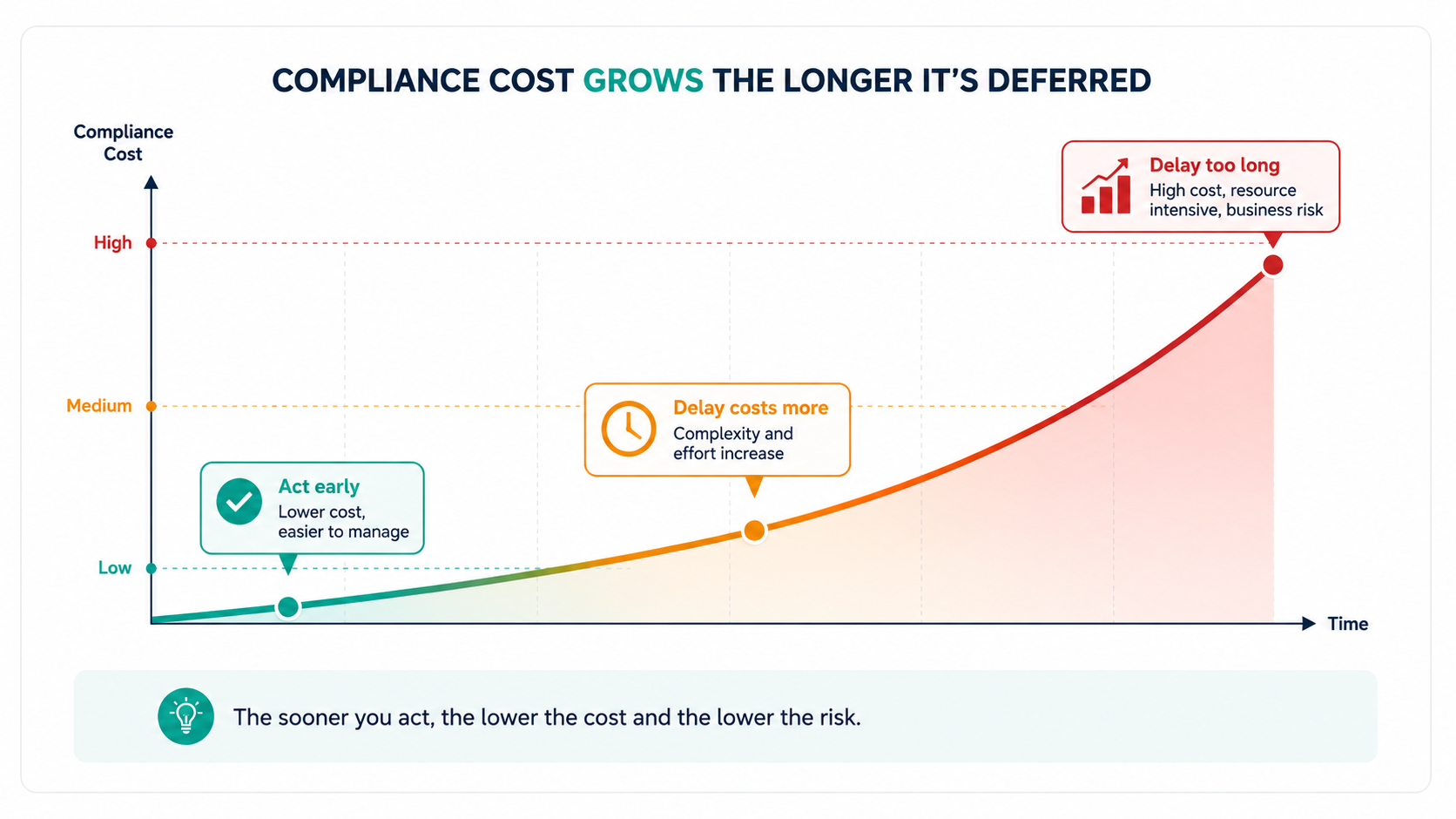
The risks of ignoring DPDP compliance are not evenly distributed across time. They accumulate quietly and then arrive suddenly, in the form of a regulatory inquiry, a failed enterprise audit, a data incident, or a deal that goes to a competitor that was prepared. Building the foundation now is the only approach that does not eventually require paying that bill under pressure.