
The One Compliance Mistake That Catches Most Indian Startups Off Guard
Trending
Trending
There is a pattern that plays out repeatedly across Indian startups and SMEs. A certification is pursued, ISO 27001, or a DPDP compliance framework, or an internal audit requirement from a large client. The team works hard, gets through it, and then collectively exhales.
The documents are filed, the certificate is framed, sometimes literally and then surprisingly nothing happens for the next eight months.
Controls that were documented meticulously during the push stop getting updated. Evidence collection drops off. The spreadsheet that tracked everything gets opened less and less. By the time the next audit arrives, the team is essentially starting from scratch, except now they also have to explain why a control that was supposedly in place has no evidence of actually operating.
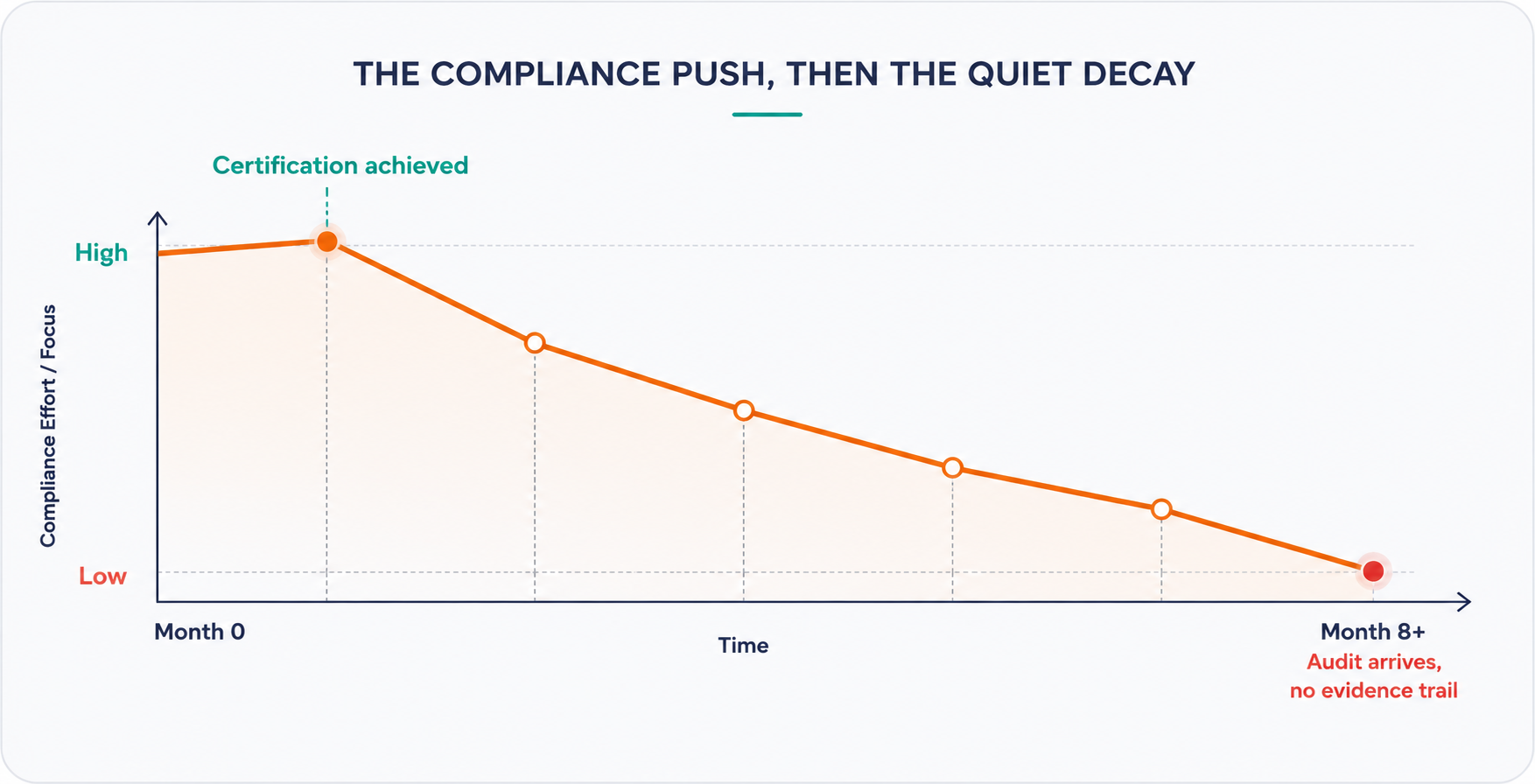
This is the single most common compliance mistake. Not a missing regulation, not a misunderstood requirement. Just the assumption that compliance is a project with a finish line.
The checklist mindset is understandable. Most teams encounter compliance as a deadline-driven exercise, there is an audit coming, a client requirement, a certification to achieve. So it gets treated like a product launch. Intense effort, clear end date, relief when it is done.
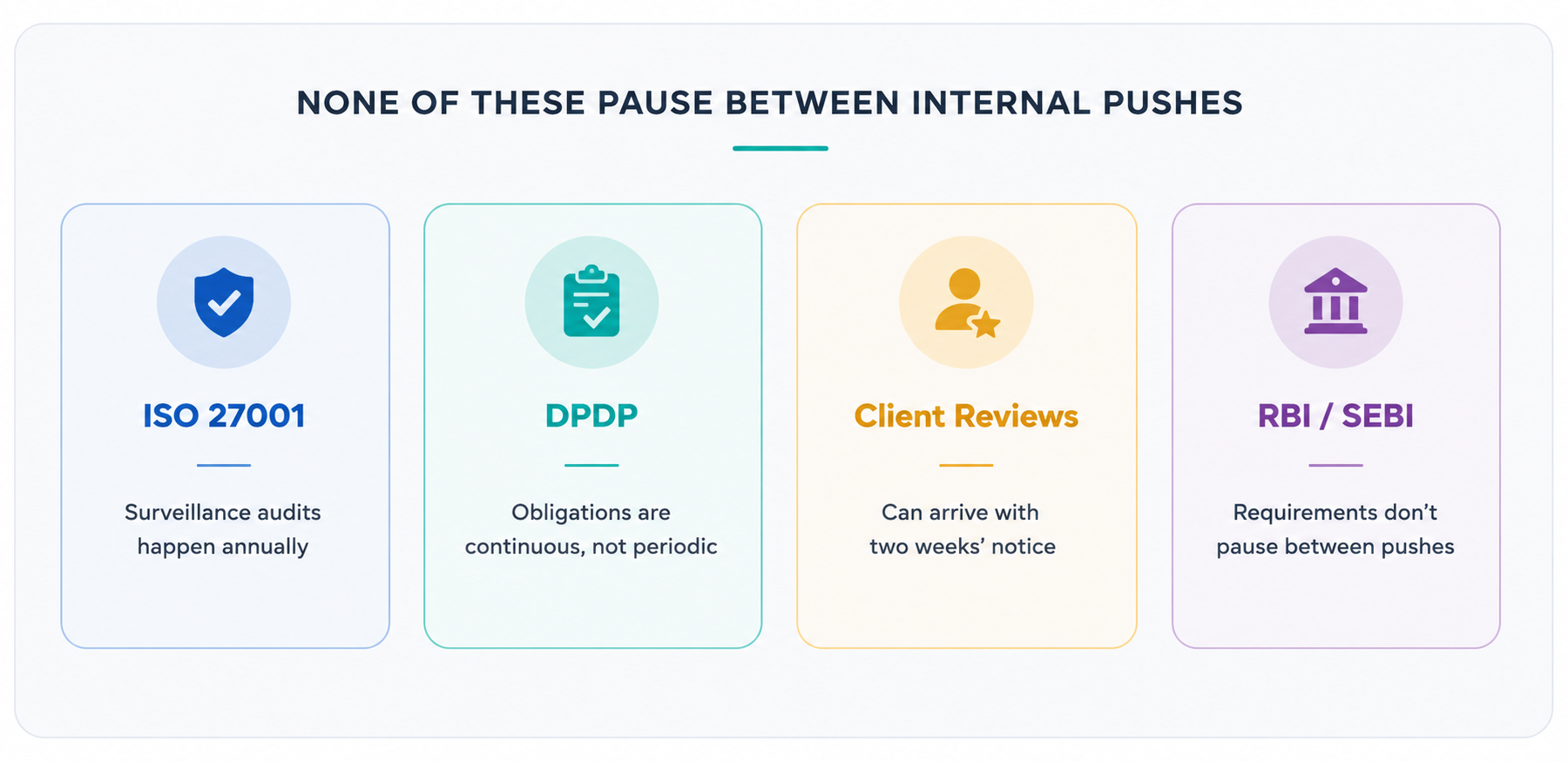
The problem is that regulators and auditors do not see it that way:
Manual processes make this worse. When compliance lives in spreadsheets and shared drives, there is no system alerting anyone when a control has lapsed or when evidence has stopped being collected. Everything depends on someone remembering to check, and in a small team with competing priorities, that is a fragile dependency.
The consequences of treating compliance as a one-time activity tend to be invisible right up until they are not.
Documented and implemented, then quietly stops being followed. It exists on paper but not in practice — an auditor asking for six months of evidence will not find any.
Auditors can tell the difference between documentation maintained continuously and documentation assembled in a sprint. The latter raises questions — sometimes findings.
Risks assessed twelve months ago reflect a business that may look quite different today. New vendors, products, and data flows change the risk landscape.
Under the DPDP Act, obligations do not pause. A breach eight months after a compliance push carries the same penalty exposure as one with no effort made at all.
The shift from periodic to continuous compliance is less about working harder and more about building a system that does not depend on memory and deadline pressure.
In practice, this means:
Automation is what makes this sustainable for teams without dedicated compliance functions. A platform that tracks control status in real time, flags gaps when they emerge, collects evidence continuously, and surfaces risks before they become findings is not a luxury. For a small team trying to stay genuinely compliant, it is the only approach that scales.
Compliance built around deadlines will always be expensive, in time, stress, and eventually in penalties or failed audits.
The startups that figure this out early do not just pass audits more easily. They build something that compounds: trust with clients, credibility with investors, and an internal culture where compliance is not the thing everyone dreads, but the thing that quietly makes everything else easier.
Compliance is not a project and it never was. The businesses that treat it like one will keep rediscovering that fact, at every audit, every client review, every due diligence process, and paying the price each time.
The ones that build it as a continuous function, with proper systems and clear ownership, stop fighting the same battles repeatedly. That is not a small operational difference. Over time, it is a significant competitive one.