
Kawach vs OneTrust — Which is Better for Indian Startups
Recommended
Recommended
When an Indian startup starts evaluating GRC and privacy compliance platforms, OneTrust almost always appears on the shortlist. The platform has genuine brand recognition, a comprehensive feature set, and a track record with large enterprises across the globe. On paper, it looks like the obvious choice.
The problem is that "obvious choice for large enterprises" and "right fit for an Indian startup" are rarely the same thing. The gap between them shows up quickly once the evaluation goes beyond the feature list into what implementation, daily use, and total cost actually look like for a thirty-person company trying to get DPDP-compliant before a Series A closes.
OneTrust was built for enterprise-scale privacy and GRC management. Its capabilities cover GDPR, CCPA, and a broad range of international regulations, with modules spanning data mapping, consent management, vendor risk, ESG, incident response, and policy management. For a global organisation managing compliance across multiple jurisdictions with a dedicated privacy and compliance team, OneTrust offers breadth that is hard to match.
Kawach was built specifically for Indian startups and SMEs navigating the compliance requirements that matter most in that context — ISO 27001, the DPDP Act, and the audit readiness expectations that come up in enterprise sales and investor due diligence. The platform is designed around the reality that most of its users do not have dedicated compliance functions, cannot commit to lengthy implementation projects, and need something operational quickly rather than comprehensively.
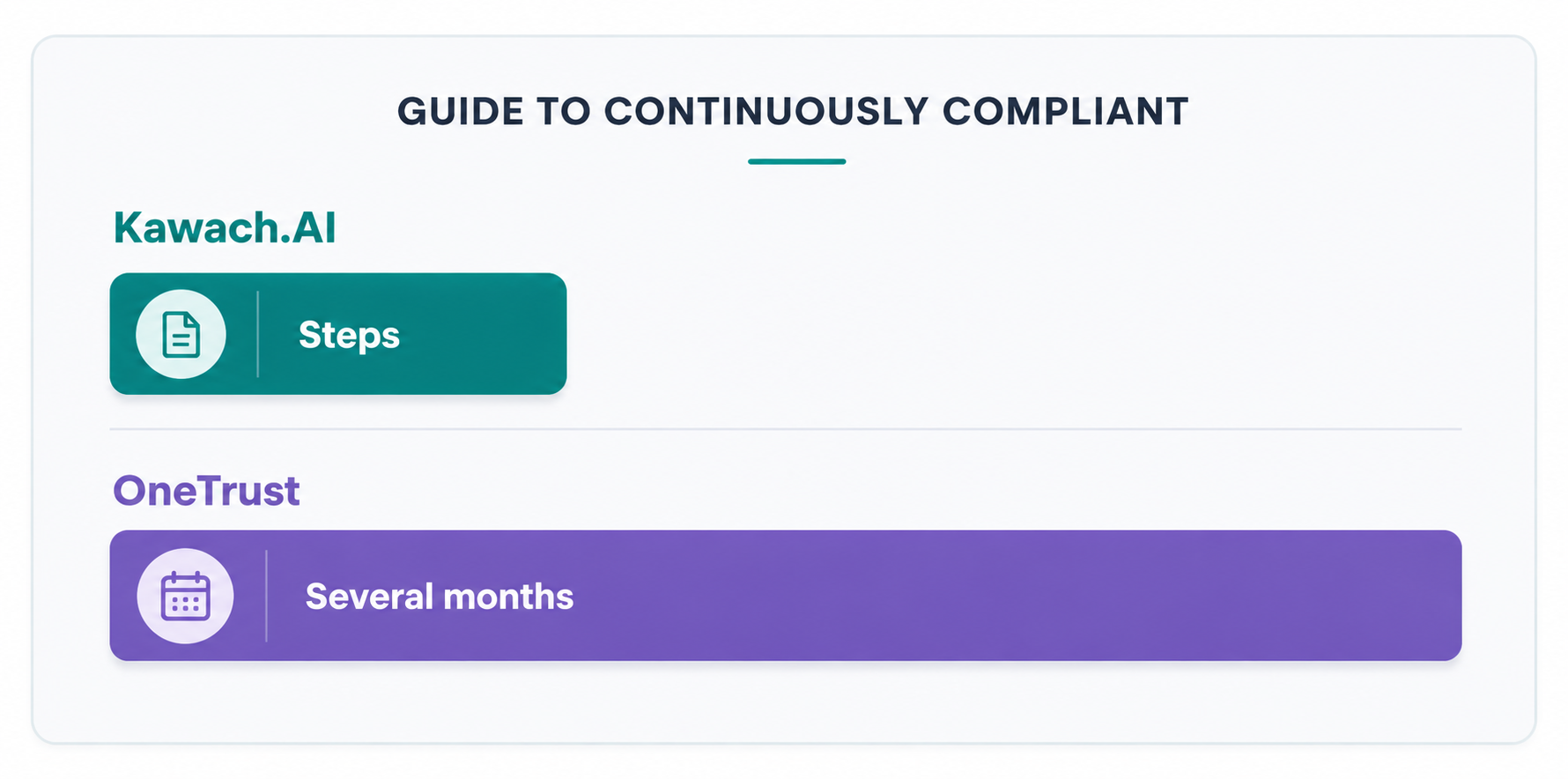
OneTrust implementations vary in complexity depending on which modules are being deployed, but the pattern for startups that have gone through the process is consistent. Configuration takes time. Getting the data mapping module to reflect the actual state of a company's data flows requires significant input. Consent management setup involves decisions that require legal and technical input simultaneously. By the time the platform is operational in a meaningful way, several months have typically passed and the team has spent more time on implementation than they expected.
Kawach's approach prioritises time-to-value. Pre-built frameworks for ISO 27001 and DPDP mean the foundational compliance structure is already in place when the platform is deployed. The configuration work is about adapting the framework to the specifics of the business rather than building the compliance programme from inside the tool. For most startups, getting from sign-up to operationally useful takes days rather than months.
The person managing compliance at most startups is not a full-time compliance professional. That person needs a tool they can use confidently without extensive training or a support contract.
OneTrust's depth comes with corresponding interface complexity. The platform has a lot of capabilities, and navigating them requires familiarity that takes time to build. For experienced GRC professionals supported by dedicated teams, that is manageable. For a generalist at a startup who needs to log in, check compliance status, and handle a data subject request before getting back to their actual job, it creates friction that compounds over time.
Kawach is designed around the non-specialist user. The workflows reflect how small teams actually manage compliance rather than how enterprise compliance departments are structured, and the learning curve is shallow enough that onboarding does not require a dedicated training process.
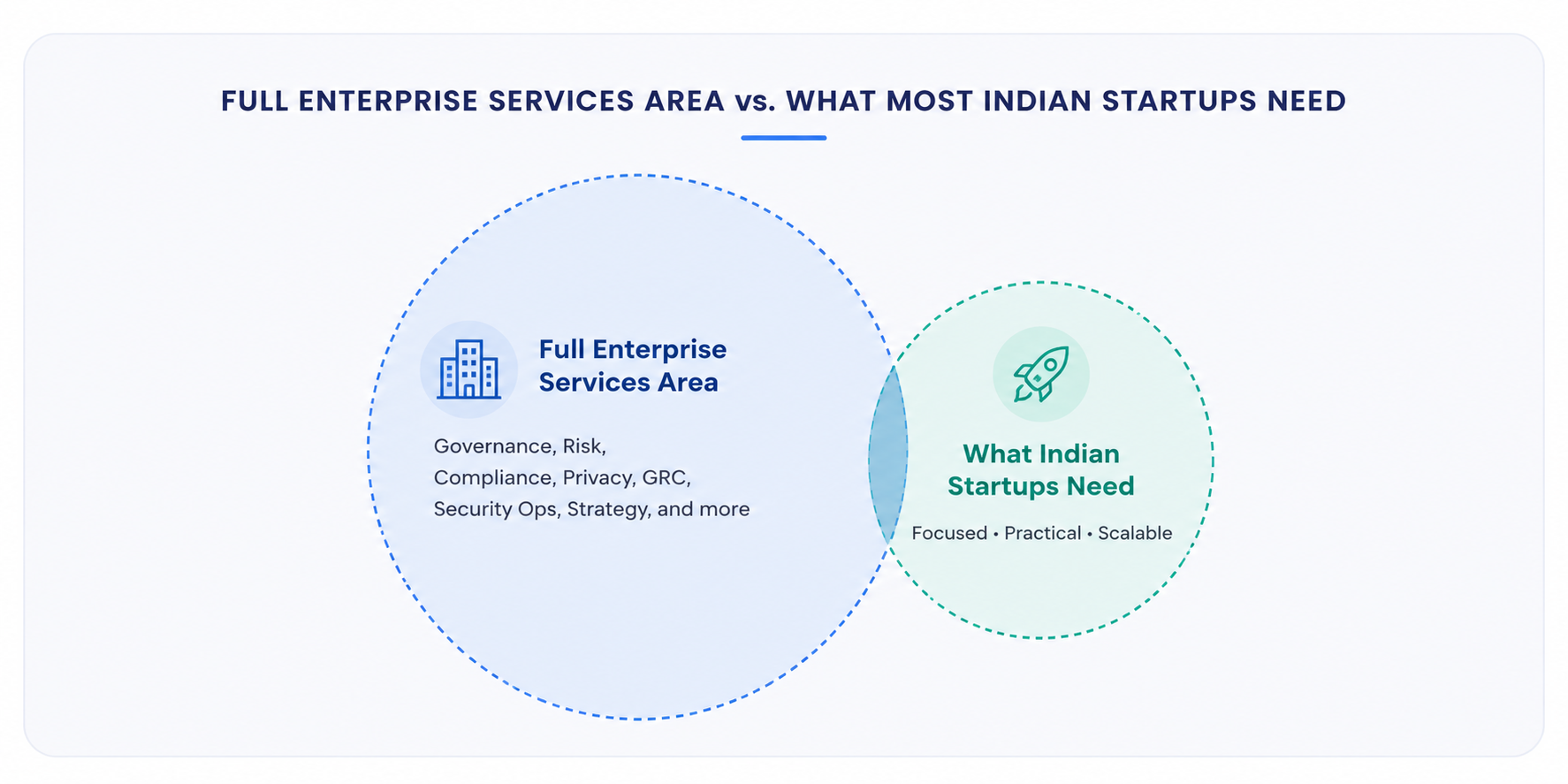
OneTrust's feature set is genuinely impressive in scope. Data mapping, DSR automation, consent management, vendor risk management, policy management, incident response, ESG reporting — the platform covers the full surface area of enterprise GRC and privacy management. For organisations that need all of it, that comprehensiveness is valuable.
For an Indian startup, the relevant question is which of those capabilities actually apply. DPDP compliance, ISO 27001 audit readiness, consent management, data subject request handling, and evidence collection for audits cover the vast majority of what most Indian startups need. A platform that does those things well and simply serves that need better than one that does thirty things with varying degrees of relevance to the Indian regulatory context.
OneTrust pricing reflects its enterprise positioning. Licensing costs, implementation effort, and the ongoing resource requirements to manage the platform add up to a total cost of ownership that most startups find difficult to justify against other priorities at their stage.
Kawach is priced for the organisations it was built for. The cost is proportionate to a startup's compliance budget rather than an enterprise's, and the minimal implementation and maintenance overhead keeps the total cost of ownership low throughout the engagement.
The right platform is the one built for the organisation using it. For most Indian startups evaluating GRC and compliance tools, the choice between a platform designed for global enterprises and one designed specifically for their context is less complicated than it initially appears. The question worth asking is not which platform has more features, but which one the team will actually use consistently, get operational quickly, and rely on when an audit or due diligence request arrives.