
DPDP Compliance Checklist for SaaS Companies
Must Read
Must Read
SaaS companies occupy an interesting position under the DPDP Act. The nature of the business model means personal data is central to them. User accounts, behavioural analytics, usage logs, billing records, support interactions — every layer of a typical SaaS product involves collecting, processing, and storing personal data at scale.
The DPDP Act's requirements apply to all of it, and the volume and complexity of data flows in a SaaS environment make compliance both more important and more operationally demanding than it is for businesses with simpler data footprints.
The checklist below covers the core compliance areas that SaaS companies need to address.
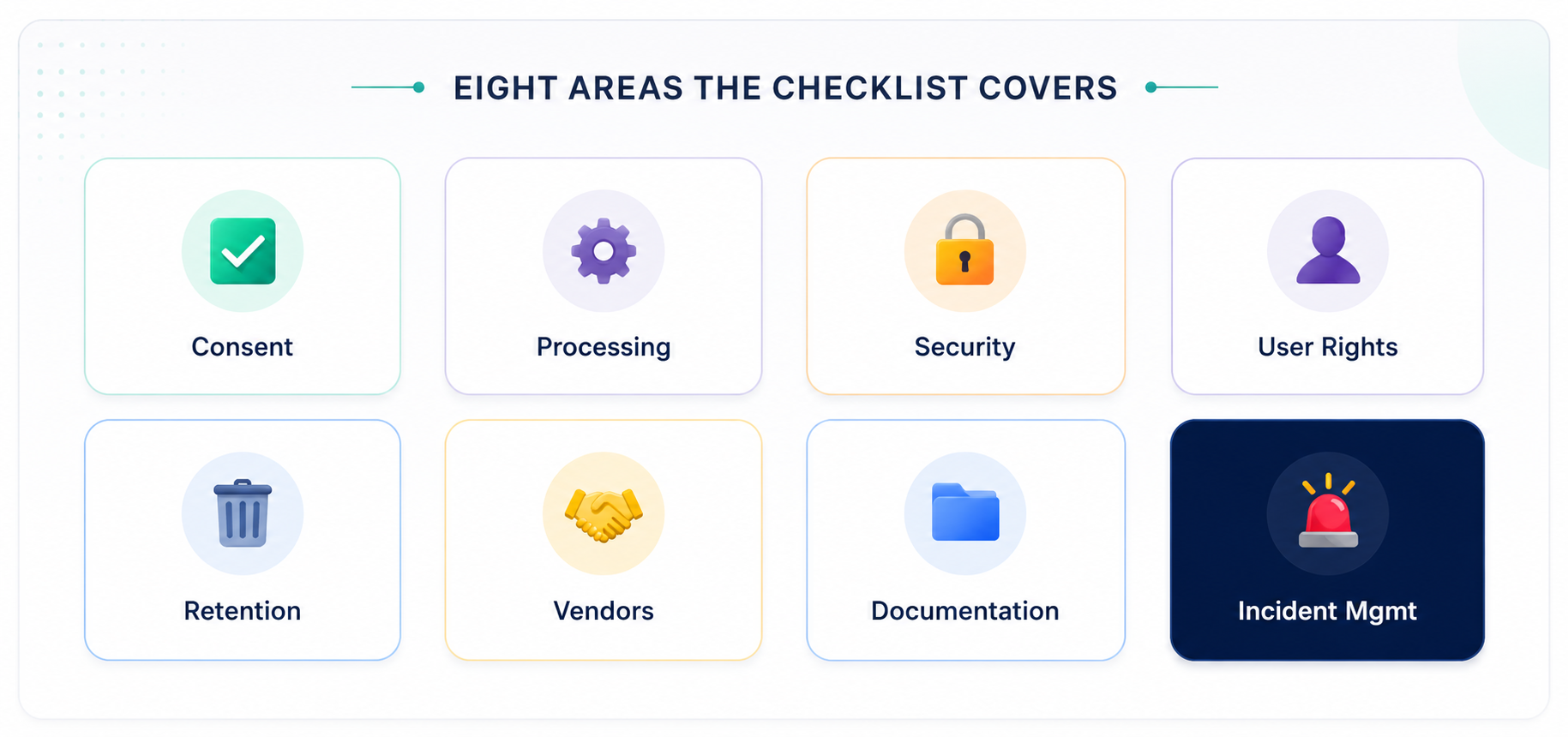
The foundation of DPDP compliance for any SaaS company is getting consent right from the point of data collection.
Collect only for specific, clearly stated purposes — not because it might be useful later
Obtain explicit, informed consent before processing begins — accompanied by a notice that actually explains what is being collected and why, in language a real person can understand
Maintain structured consent records — timestamps and purpose details for every user, not a checkbox in a database with no context around it
Give users a clear, functional way to withdraw consent — not a support ticket that goes into a queue
Ensure withdrawal flows through every connected system — not just the primary database
Consent obtained for one purpose does not cover processing for another.
Process data strictly within the scope of consent — purpose drift is a compliance failure
Minimise data collection — to what is genuinely necessary for the stated purpose
Define and document clear data usage policies — that are reflected in actual practice
Restrict access to personal data — to personnel who have a legitimate operational need for it
Review data processing activities regularly — to ensure ongoing alignment with the purposes for which consent was obtained
The DPDP Act's security obligations require organisations to implement appropriate technical and organisational measures to protect personal data.
Encrypt personal data at rest and in transit — as a baseline security measure
Implement role-based access controls — with regular access reviews
Maintain authentication standards — appropriate to the sensitivity of the data being protected
Monitor systems continuously — for anomalies and potential security incidents
Keep security measures updated — as the product evolves and new data flows are introduced
Under the DPDP Act, users can ask to see their data, correct it, or have it deleted. These requests need to be handled through defined workflows, not improvised by whoever picks up the email.
Build a clear, accessible process — for users to submit Data Subject Requests that does not require them to know the right person to contact
Handle access requests completely — give users an accurate picture of the data held on them
Process correction requests promptly — and confirm the change has been made
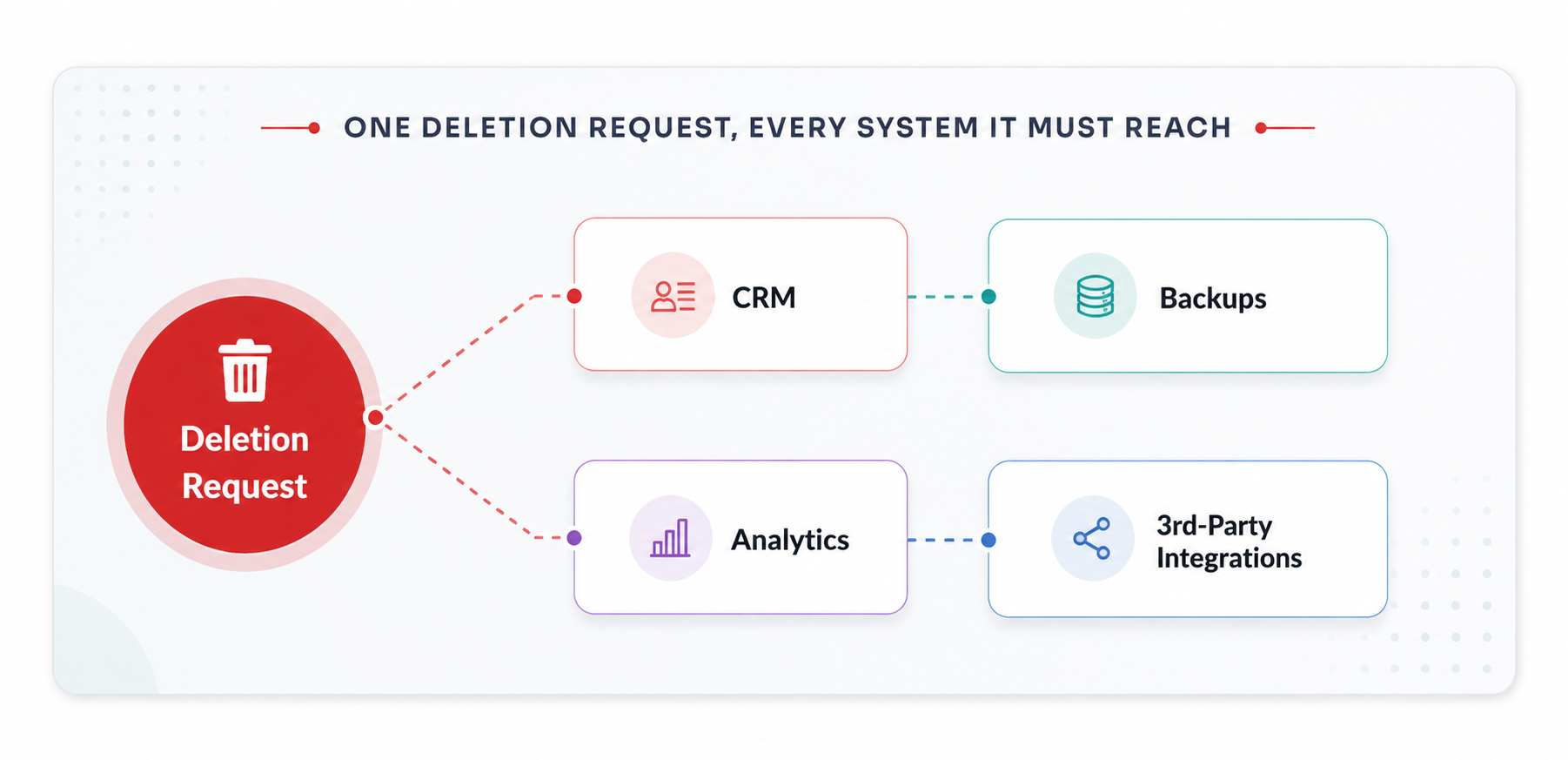
Action deletion requests everywhere — CRM, analytics, backups, third-party integrations
Log every request, every action, and timeline — this is the record a regulator will ask for
Holding data indefinitely is a compliance failure under DPDP. Retention policies need to exist, be documented, and be actively enforced.
Define retention periods for each category — personal data, based on the purpose for which it was collected
Implement automated deletion or anonymisation processes — trigger when retention periods expire
Audit existing data stores periodically — to identify and remove data that is no longer required
Ensure deletion is complete across all systems — including backups and third-party integrations, not just primary databases
Most SaaS companies process personal data through a stack of third-party tools — cloud infrastructure, analytics platforms, CRM systems, support software. Under DPDP, accountability for how that data is handled stays with the data fiduciary regardless of who is actually doing the processing.
Maintain a current inventory — every vendor with access to personal data
Assess each vendor's data handling practices — ensure they meet the standards the Act requires
Put formal data processing agreements in place — that define each vendor's obligations clearly
Review vendor compliance when the relationship changes significantly — not just at the start of the engagement
Compliance that exists in practice but cannot be demonstrated on paper is not compliance for regulatory purposes.
Maintain records of all processing activities — purpose, legal basis, data categories, retention periods
Keep records organised and queryable — consent records, policy documents, and Data Subject Request logs organised and queryable, not buried in shared drives
Document security measures and vendor assessments — and incident response procedures
Run periodic compliance reviews — and keep records of what was found and what was done about it
The DPDP Act carries mandatory breach notification obligations. When something goes wrong, the response needs to be structured and fast — the preparation for it needs to happen long before anything actually goes wrong.
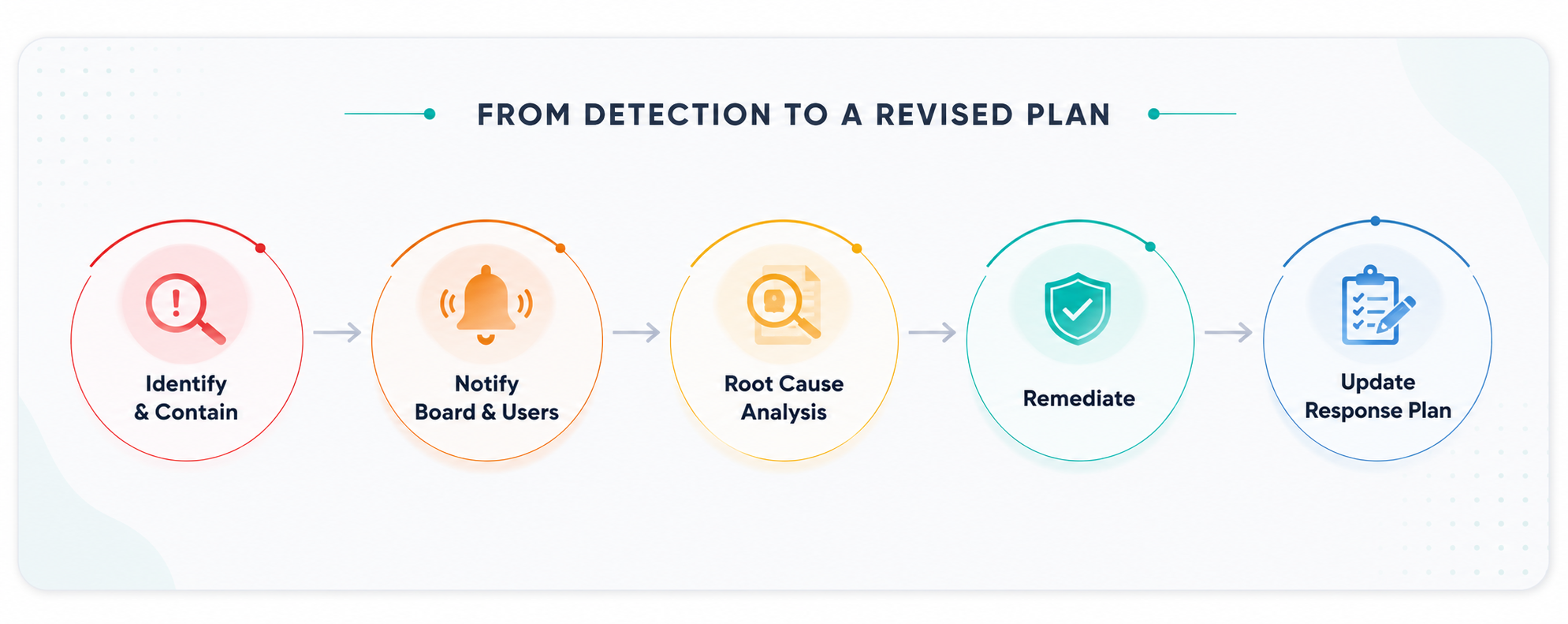
Maintain a defined incident response plan — clear ownership and escalation paths the team has actually read
Contain breaches quickly — logging every action with timestamps from the moment the incident is identified
Notify the Data Protection Board and affected users — within the timelines the Act prescribes
Conduct a root cause analysis after every incident — document both the findings and the remediation steps
Review and update the response plan periodically — a plan written for last year's product and team may not fit this year's
DPDP compliance for a SaaS company is not something that gets finished. The product evolves, the user base grows, the regulatory environment develops, and the compliance programme needs to keep pace with all of it.
The checklist above covers the structural foundations. What determines whether those foundations hold up over time is whether they are maintained as an ongoing operational function or treated as a one-time exercise that gets revisited only when something forces the issue.