
GRC Tools for Startups
Most viewed
Most viewed
There is a recognisable pattern in how startups encounter compliance for the first time. In the early days, it simply does not come up — there are more immediate problems to solve and the regulatory consequences feel distant.
Then a funding round triggers investor due diligence with detailed questions about data governance, or an enterprise sales conversation stalls because the prospect's security team wants ISO 27001 documentation. Or the DPDP Act lands on the radar and someone realises the privacy policy has not been reviewed since the product launched.
At that point, compliance stops being a background concern and becomes an urgent priority — usually at a moment when the team has the least bandwidth to deal with it.
The startups that navigate this well are the ones that built the right foundations early enough that the urgent moments never become crises.
Governance, Risk, and Compliance sounds like the kind of language that belongs in a large enterprise with a dedicated legal floor. For a startup, it means something more practical: having a structured, centralised way to track what the business is obligated to do, what the risks are, and whether the right controls are actually in place and working.
Without that structure, compliance in a startup defaults to whoever has the most organisational awareness, usually the CTO or a senior engineer who did not sign up to be a compliance manager.
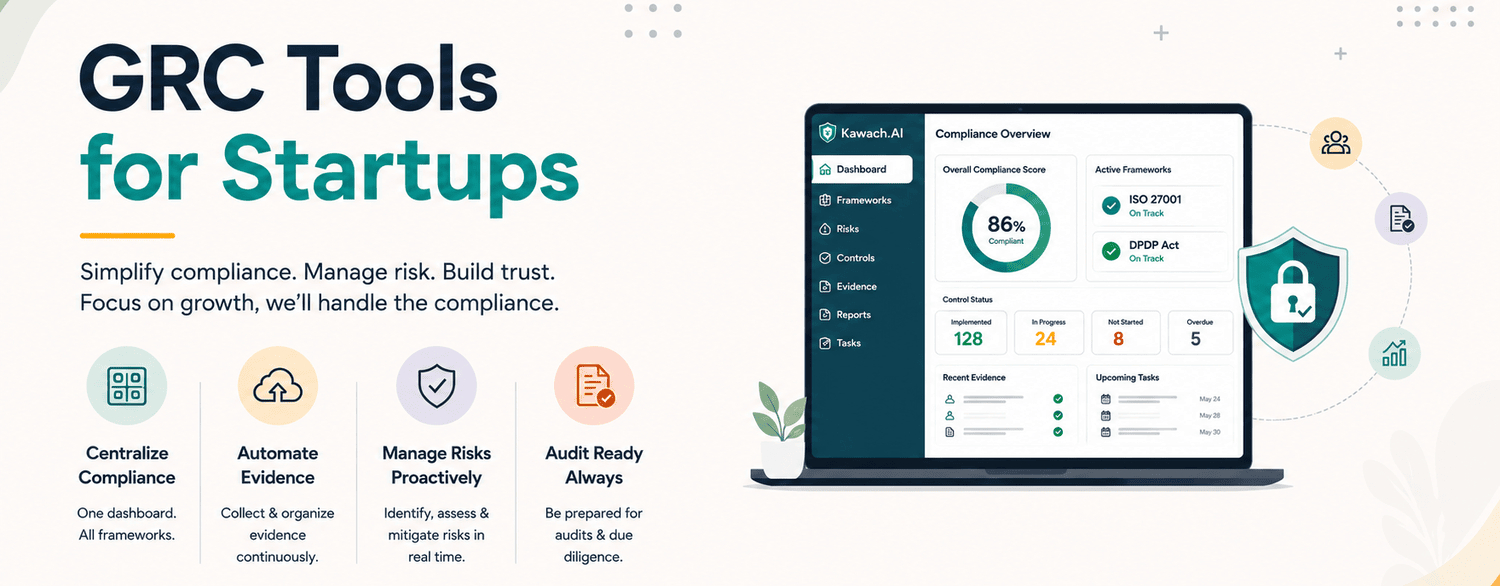
A GRC tool replaces that improvised infrastructure with something that actually works — centralised frameworks, automated evidence collection, real-time compliance status, and audit documentation that exists before anyone asks for it.
The compliance landscape for startups has become more demanding in a short period of time, and the challenges that come with it are fairly consistent across the ecosystem.
Limited internal expertise — Most early-stage startups do not have a compliance function. The knowledge required to navigate DPDP obligations, implement ISO 27001 controls, and prepare for investor due diligence is specialised, and hiring for it is expensive relative to the stage of the business.
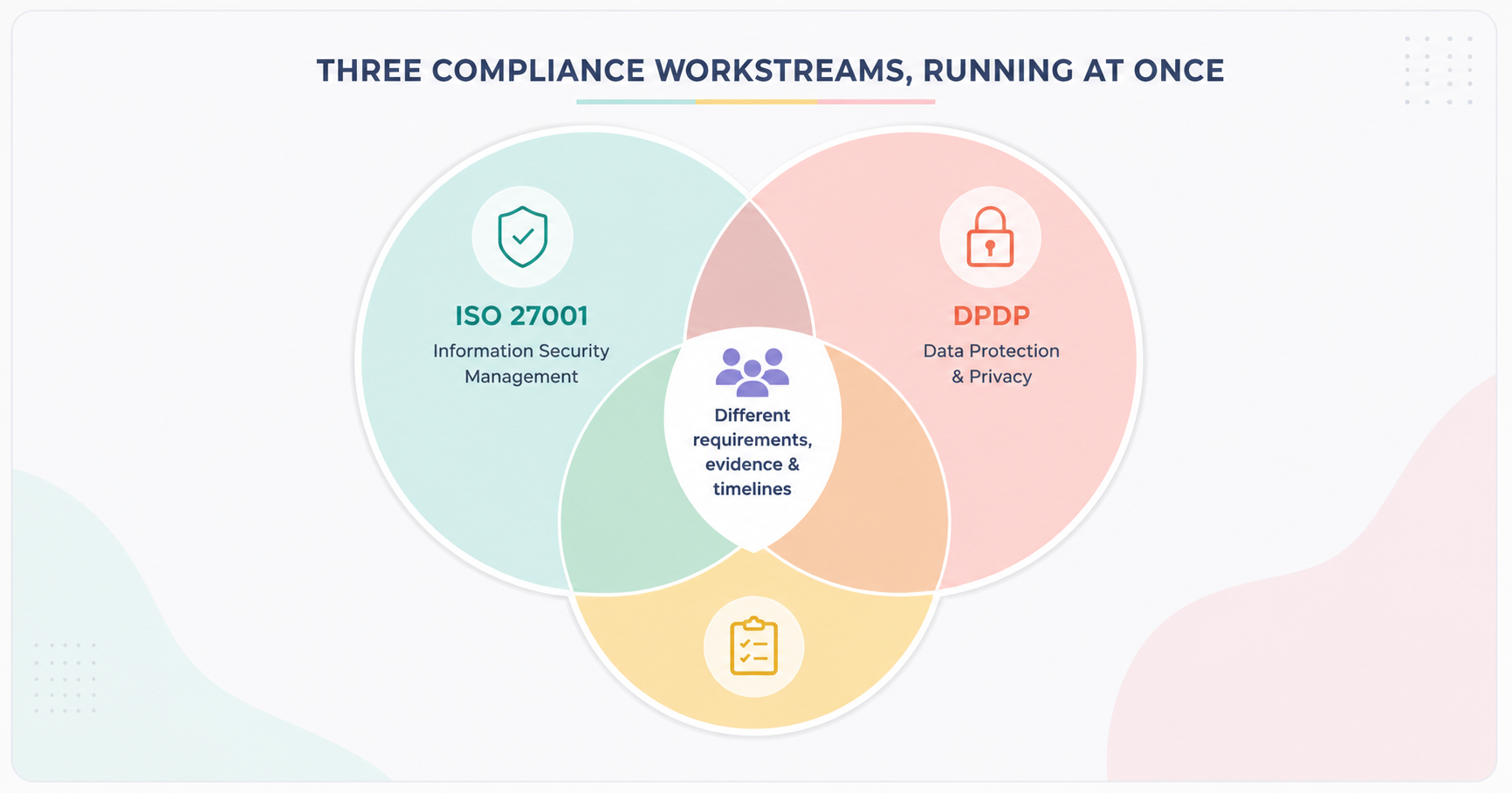
Multiple overlapping frameworks — A startup pursuing ISO 27001 certification while also building DPDP compliance and preparing for a client security audit is effectively running three separate compliance workstreams simultaneously. Each has different requirements, different evidence standards, and different timelines.
Time-consuming manual documentation — Every hour spent maintaining compliance spreadsheets, chasing team members for evidence, and assembling audit documentation manually is an hour not spent on product, customers, or growth.
The shift to a proper GRC platform changes the operational experience of compliance in ways that are immediately felt by the teams managing it.
A centralised compliance dashboard — a real-time view of where the business stands across all active frameworks, what controls are in place, what evidence exists, what gaps need to be addressed, and what deadlines are approaching, replacing the periodic scramble of manually compiling a status picture.
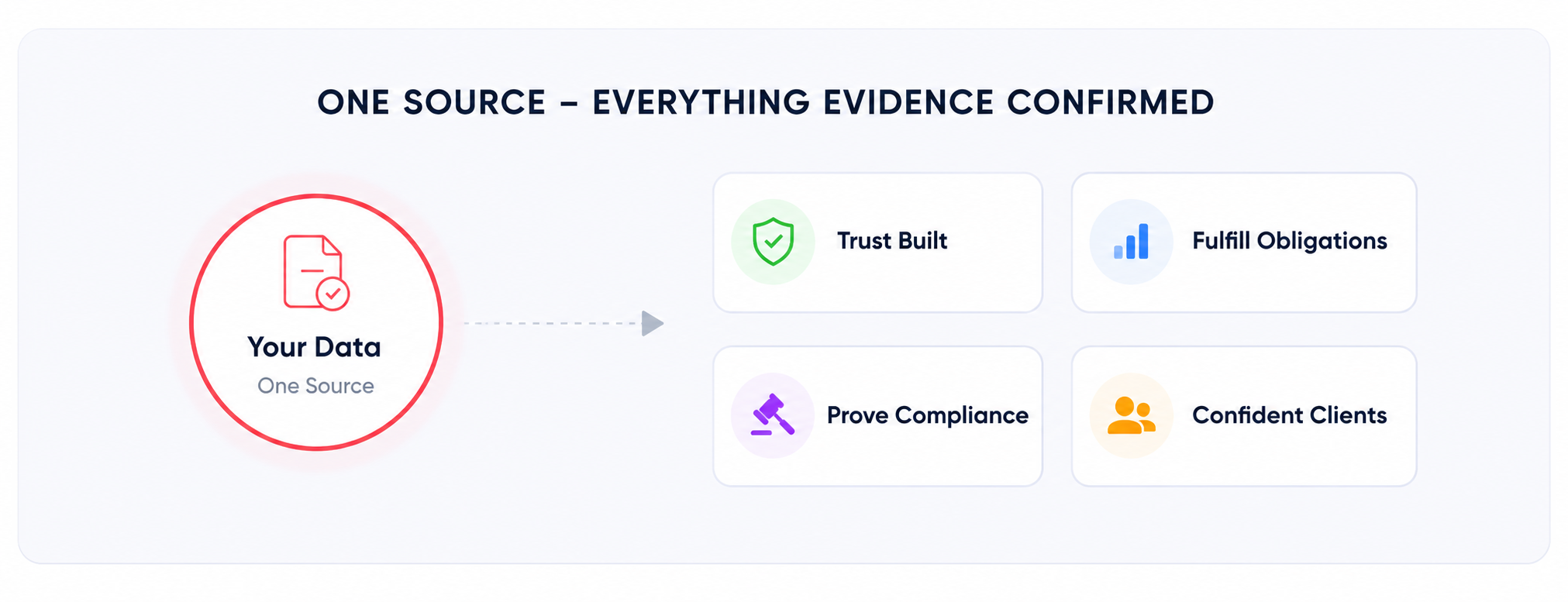
Automated evidence collection — removes the most time-consuming part of audit preparation; rather than manually pulling screenshots, logs, and access review records before each audit cycle, the platform captures and organises evidence continuously, so when an audit arrives, the documentation is already there.
Pre-built frameworks for DPDP and ISO 27001 — the mapping work, identifying which controls apply, what evidence is required, and how to structure the compliance programme, does not need to be done from scratch for every framework.
The GRC market is dominated by enterprise platforms built for large organisations with dedicated implementation teams and multi-month deployment timelines. For a startup, those platforms are typically too expensive, too complex, and too slow to deploy to be practical.
Relevant framework coverage — including DPDP, ISO 27001, and the compliance areas that come up in investor and enterprise due diligence.
An implementation timeline measured in days or weeks — rather than months.
Usability that does not require a compliance specialist — to operate day to day.
Scalability that accommodates growth — without requiring a platform change at every headcount milestone.
The commercial benefits of early compliance investment compound over time in ways that make the cost of building it early look modest in retrospect.
ISO 27001 certification achieved before the first serious enterprise sales conversation opens doors that would otherwise remain closed. Clean DPDP compliance documentation reduces friction in investor due diligence, a process where compliance gaps have an outsized negative impact relative to their actual severity. A demonstrated compliance posture signals organisational maturity that early-stage companies often struggle to evidence in other ways.
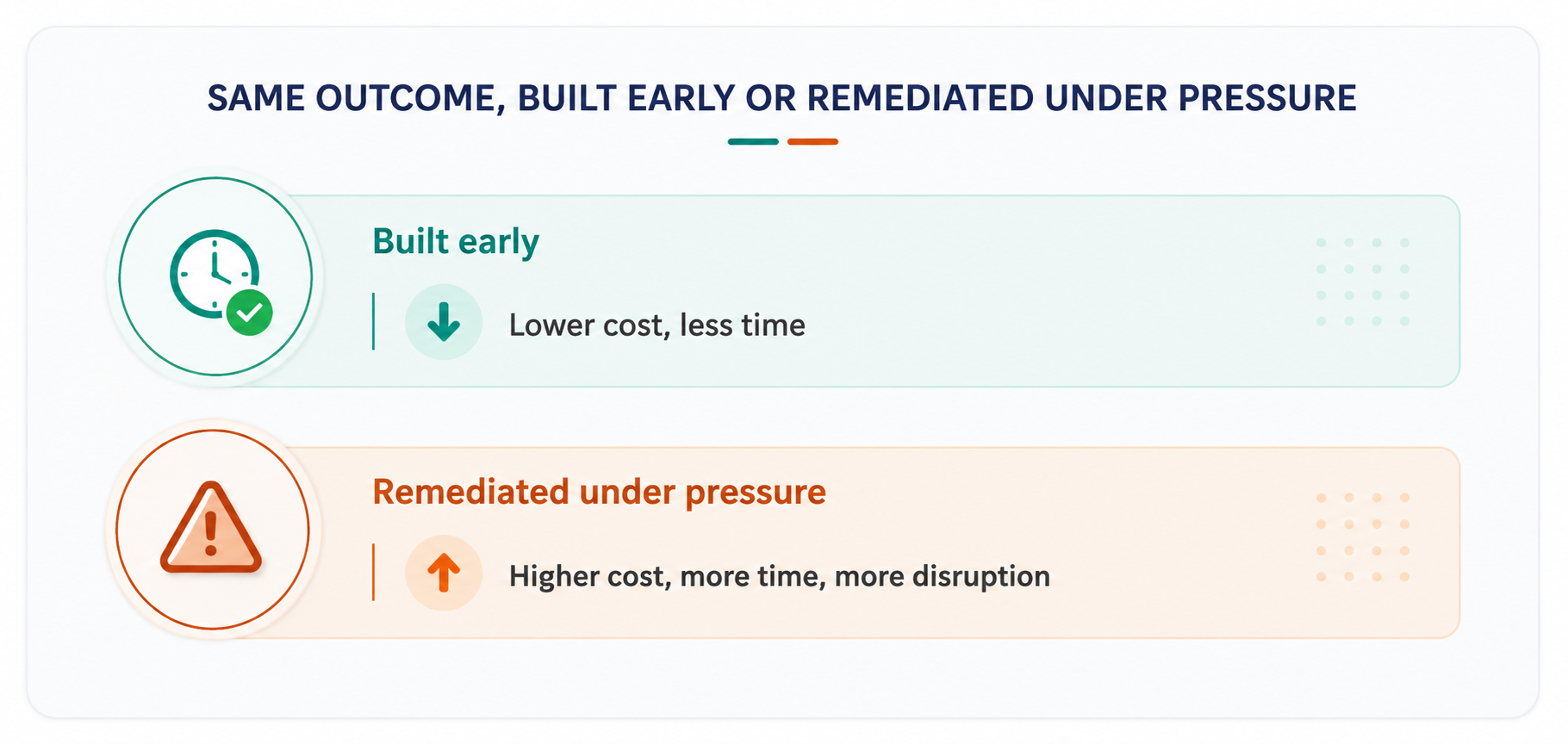
The startups that build compliance infrastructure early consistently find that it costs less, takes less time, and creates fewer disruptions than remediating compliance gaps under pressure later.
Compliance is becoming a growth function, not just a risk management one. The regulations are more demanding, investor expectations are higher, and enterprise clients are asking harder questions earlier in the sales process.
Startups that treat a GRC tool as infrastructure — something built properly once and maintained continuously — will scale without compliance becoming the thing that slows them down at every inflexion point.